
Grab a cloth tape, your most-worn bra, and a sticky note. These three fit checks catch the stuff mirrors miss.
The seated test that exposes hidden pulling
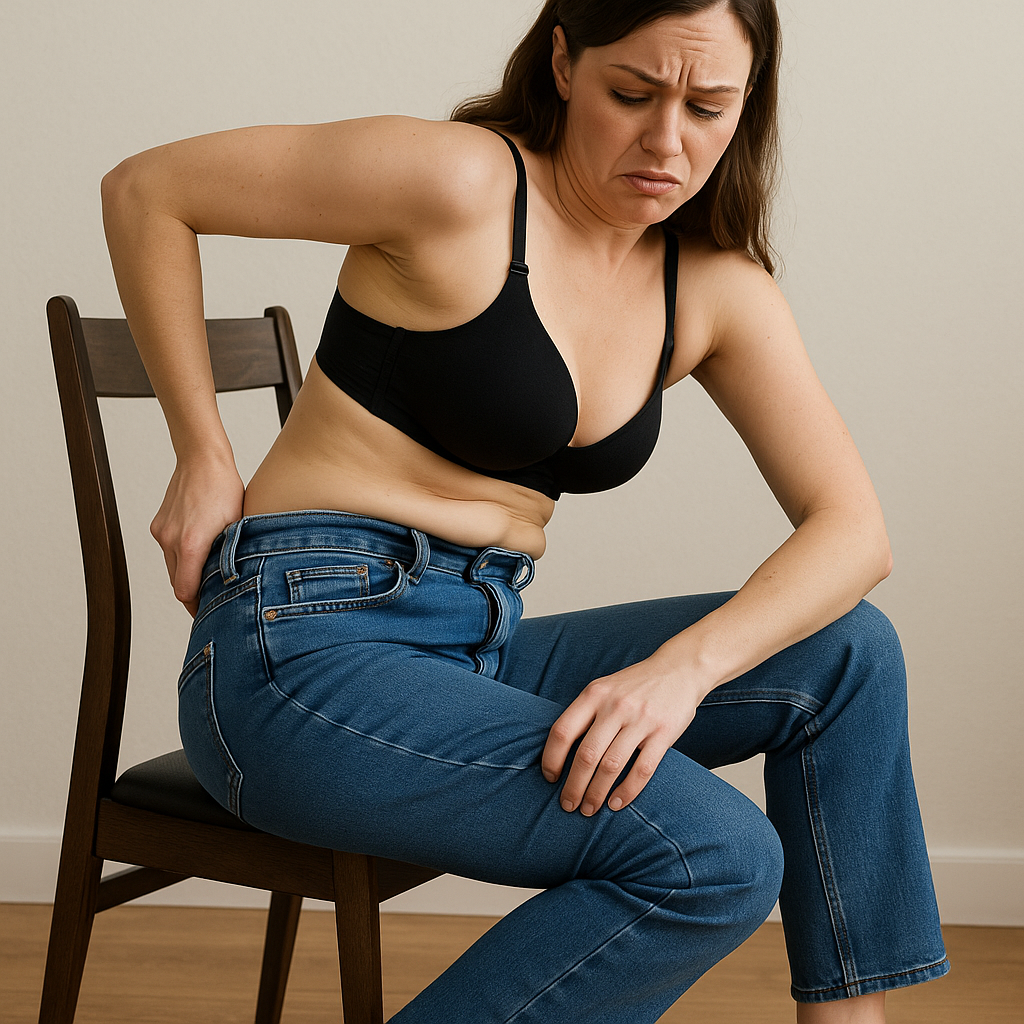
I learned this one the hard way on a day I thought I looked pulled together until I got in the car. The photo in the mirror lied. The outfit lived in a different reality once I sat, reached for the seatbelt, and my waistband tried to climb into my ribs. So now I do a seated test before I call anything a keeper, and it has saved me from buying the same “almost” pants three times.
Put on your most-worn bra (the one you default to, not the fancy one that changes your proportions) and your jeans or trousers. Sit in a chair with a firm seat, not your bed. Do three boring motions: cross one ankle over the opposite knee, lean forward like you’re tying a sneaker, then twist at the waist like you’re grabbing something from the passenger seat. If your waistband rolls, the front button digs, or the pockets flare open like little wings, that’s not you being picky. That’s a fit issue you will feel all day. In denim, I look for the front rise staying flat when I bend; in tailored pants, I watch for diagonal pulling at the fly (those drag lines mean the hip or thigh is too tight, even if you can zip it).
The style part, the lens this falls under for me, is that it changes how I shop. When I try on, I bring a cloth tape measure and treat the seated test like a mini fitting room ritual. Brands like Madewell and Abercrombie can both fi standing up, but the seated test tells me which pair will survive a workday without me tugging at the waist every time I stand. If I’m ordering online, I do it at home and immediately note the exact failure on a sticky note (“waist rolls when seated” beats “doesn’t feel right”). That note is what keeps me from re-ordering the same cut six months later because the model photo was convincing.
Check your shoulder seams with a phone photo
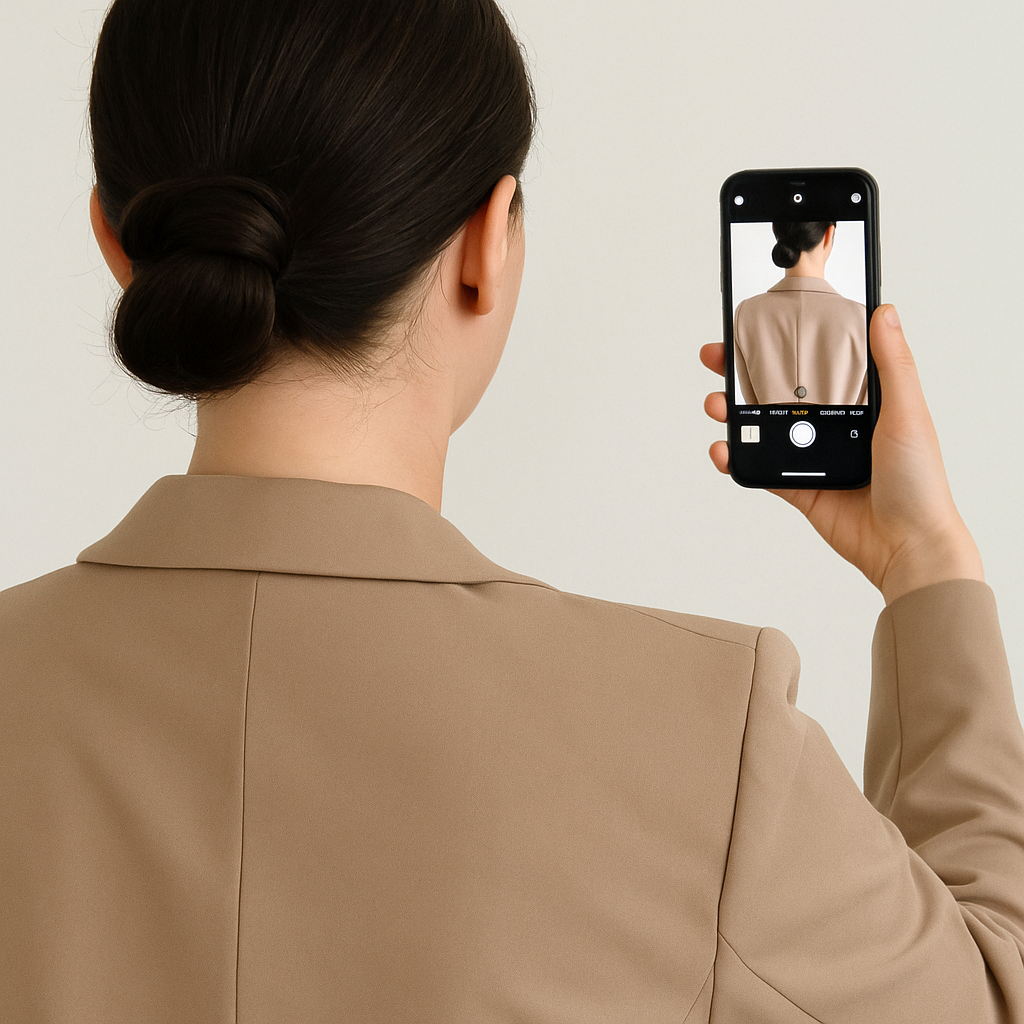
Mirrors are terrible at shoulders because you’re always looking at yourself from the front, slightly posed, with your chin up. Shoulders don’t care about any of that. They either sit where they should or they don’t, and when they don’t, every other styling trick gets weird: necklaces tilt, sleeves twist, and your blazer looks like you borrowed it from someone with a different skeleton.
Here’s the fastest check I know. Put on the top you keep doubting (tee, button-down, blazer, knit). Stand relaxed, arms at your sides, and have your phone take a quick photo from behind. Timer works. You’re looking for one thing: where the shoulder seam lands relative to the bony point of your shoulder. On most structured pieces, the seam should sit right at that edge. If it’s drifting down your upper arm, the garment is too big in the shoulder and it’ll drag the whole silhouette down. If it’s sitting up on your shoulder toward your neck, you’re getting that tight, slightly raise look, and you’ll see the fabric pulling into little radiating lines when you reach forward.
This is the style-inspiration part I wish someone had told me earlier: if the shoulder is wrong, sizing down or up isn’t always the fix, switching the cut is. In a blazer, I can sometimes size up for the chest and then get the waist nipped, but I can’t tailor a shoulder without spending more than the jacket. So I stop negotiating. I also use this check when I’m trying to copy an ico outfit that looks effortless on Pinterest: the reason my version falls flat is often that the tee’s shoulder is dropping and making the sleeves flare, while the reference photo has a tighter shoulder line and cleaner sleeve pitch. A plain white tee from Everlane and a plain white tee from Uniqlo can read totally different because the shoulder seam is doing different work.
Once you see it, you can’t unsee it. And it changes the way you buy basics: fewer pieces, better lines, less fidgeting.
The waistband-to-hem ratio for dresses and skirts
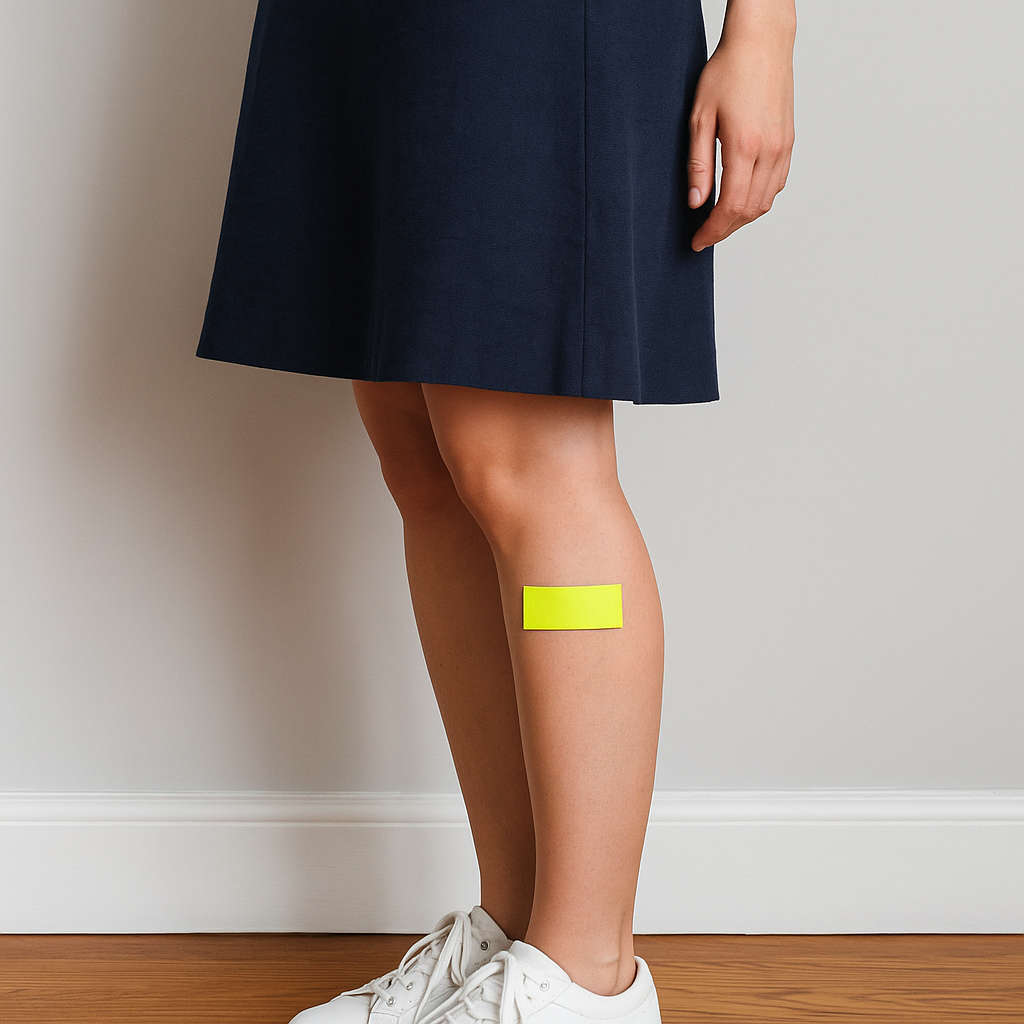
I used to buy skirts and dresses based on the vibe in the fitting room, then wonder why they turned into closet orphan at home. Not because they were ugly, but because I couldn’t figure out shoes, tights, or a jacket that didn’t make my legs look chopped in half. The fix wasn’t more options. It was one tiny measurement habit.
Take a sticky note or a tiny piece of painter’s tape and make a mark on your leg where you like a hem to hit for everyday wear. For me it’s a spot a couple inches above the knee, the point that feels like I can sit, walk, and not think about it. If you’re a midi person, pick the spot that looks intentional with your most-worn shoes (sneakers, loafers, ankle boots). Now try on the skirt or dress and see where the hem lands relative to that mark. If it’s hovering right on the widest part of your calf or hitting exactly at the knee when you hate that look, that’s your answer. It doesn’t matter what the model is doing in the product photo.
The ratio part comes from the waistband. Pay attention to where the waist sits, then what the hem does. A skirt that sits at your natural waist and ends at a length you like is usually easy to style. A skirt that sits lower (more mid-rise on the torso) often needs either a shorter hem or a more deliberate shoe to keep it from feeling heavy. This is where the style icon lens matters, because the outfits you’re saving are usually consistent about this without saying so: high waist with a longer hem, or low waist with a shorter hem, and the shoes echo that choice. When I try to mix the formulas, I’m the one who looks off, not the skirt.
I do this at home with returns because store lighting is a scam and fitting-room mirrors are funhouse-adjacent. I put on the shoes I actually wear, not the random flats I grabbed near the door, and I take one side photo. If the hem is fighting my mark, I either hem it (easy win) or I send it back. That one decision has stopped a lot of “maybe I’ll wear it someday” spending.