
Three street-style fixes for claw clips, chain necklaces, and slick socks that look intentional up close.
A metal claw clip that doesn't slide down in ten minutes
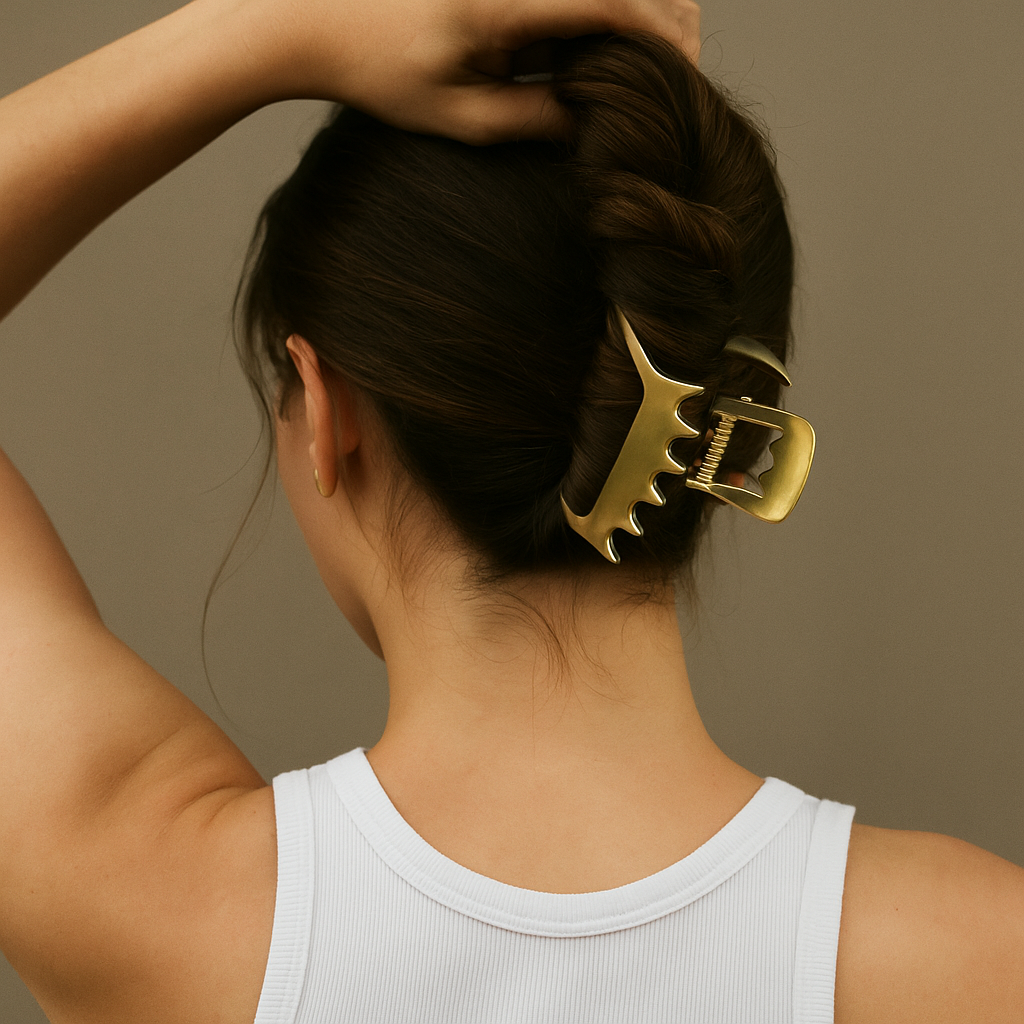
I love the look of a metal claw clip with a plain ribbed tank and baggy jeans, the whole off-duty street style thing, but metal clips are slippery little liars. They look secure in the mirror, then you hit a crosswalk, tilt your head to check traffic, and suddenly you're doing that subtle neck-hunch to keep your hair from puddling on your collar. Here's the fix I use when I want the clip to stay put without making it look like I engineered it: give the clip something to bite.
Before you twist your hair up, take a thin elastic (the kind you use for the end of a braid) and make a tiny ponytail at the base of where the twist will sit. Not a full ponytail, just a little anchor, like a 1-inch loop of hair. Twist the rest up over it, then clamp the claw clip so one row of teeth catches that elastic area. The teeth have texture to grab, and the elastic keeps the twist from slowly unwinding. On days my hair is super clean and slick, I rub a pea-sized amount of matte paste (I use the Ouai one, but any gritty matte paste works) between my palms and skim it over the section I'm twisting. You don't need hairspray fog. You need friction.
Two small notes from doing this a lot: (1) If your clip is the heavy kind with a big hinge, place it slightly higher than you think, because it will settle a bit as you walk. (2) Don't overtwist. When you crank it tight, you create a hard little coil that pushes the clip open. A looser twist with an anchor lasts longer, and it looks cooler, too, like you meant to throw it up on the way out the door.
Stop a chunky chain necklace from flipping your tee collar
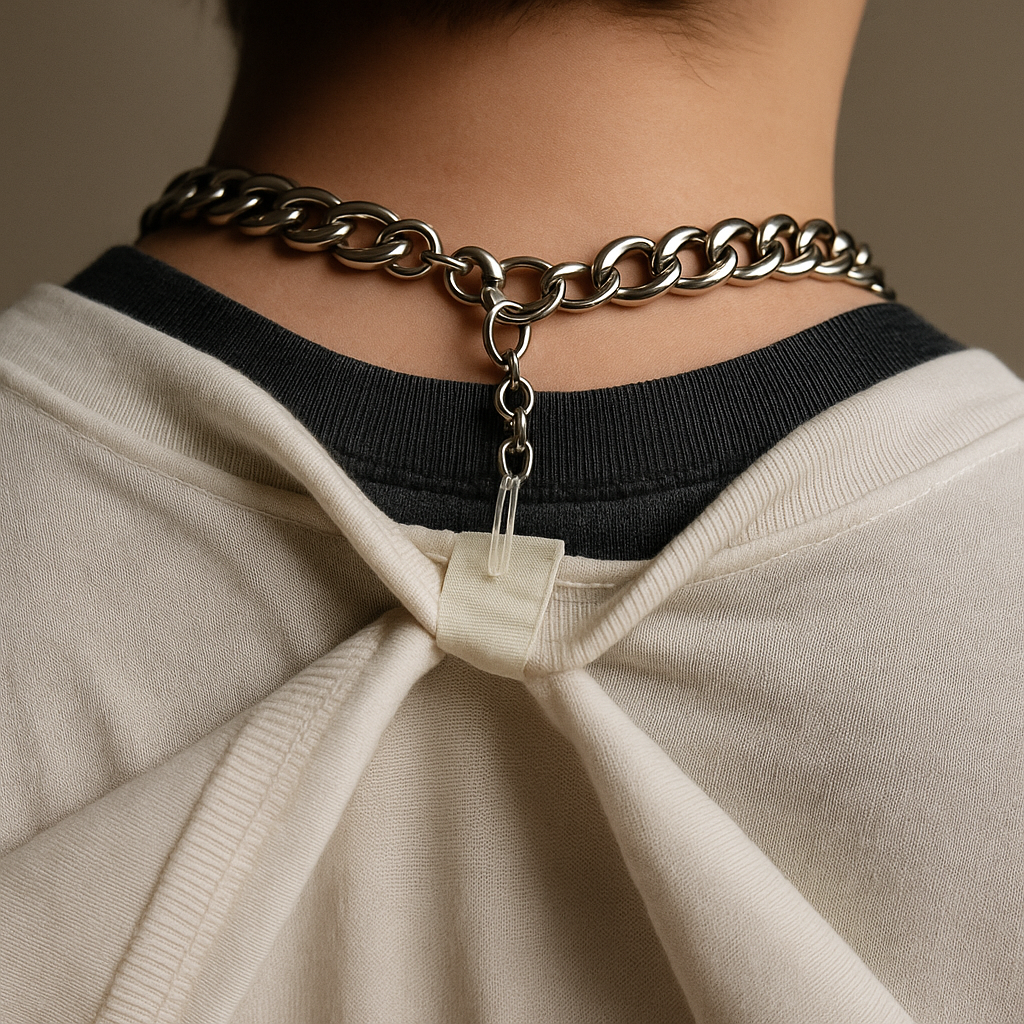
There's a specific street-style annoyance that doesn't show up until you're out in the world: you put on a chunky chain over a crewneck tee, it looks sharp for a photo, and then you walk three blocks and the chain starts grabbing the neckline. The collar flips, the back rides up, and now you look like you're wearing a shirt that's fighting you. It happens more with heavier chains and softer cotton tees, especially those vintage-wash ones that drape instead of holding a clean edge.
I fix it two ways depending on the outfit. If I'm wearing a thicker tee or a baby tee and I want the chain to sit like armor, I add a second, thinner necklace underneath as a stabilizer. Think a simple snake chain or a tiny curb chain. The thin chain sits closer to your skin and keeps the heavy one from sawing at the collar as you move. The key is length: make the thin chain 1 to 2 inches shorter than the chunky one, so it takes the friction and the chunky chain can just be pretty.
If I'm wearing a looser tee and I don't want two necklaces, I do a quick inside-the-shirt anchor. I thread the clasp end through a small clear hair elastic (yes, the same kind from your bathroom drawer), then I loop that elastic around the care label or the little inner side seam at the neckline. You're basically tethering the clasp to the shirt so the necklace can't rotate and drag the collar forward. From the outside, nothing shows. From the inside, the elastic takes the tug. This is the kind of thing you only learn after you've spent an entire coffee run readjusting your neckline and pretending you aren't.
One more detail: if your chain has a big toggle clasp, put the toggle slightly off-center to your shoulder instead of dead center at the back. The toggle is heavier, and when it's centered it acts like a pendulum that encourages the flip. Off-center, it behaves.
The no-show sock fix for loafers and Sambas
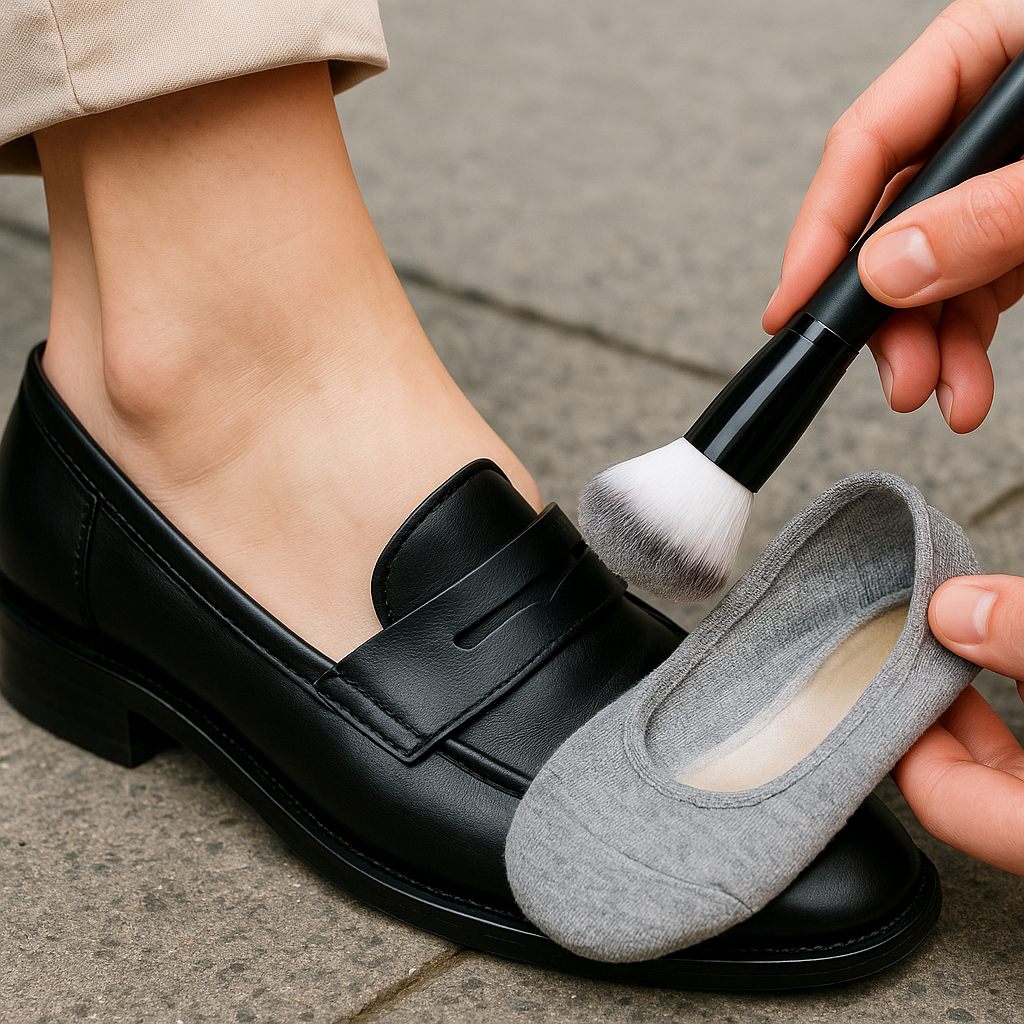
No-show socks are either invisible perfection or a personal betrayal. The worst version is when you're wearing loafers or Adidas Sambas, you feel the sock start creeping under your heel, and you have to do that awkward sidewalk shuffle to save your skin from being chewed up. I used to think it was about buying the right brand, but after trying a pile of them, it's more about shape and a tiny bit of prep.
First, pick no-shows with a deep heel cup and a real silicone grip strip, not the barely-there dotted kind. If the sock's heel is shallow, it will always lose. The ones that work best for me are the slightly higher-cut "hidden" socks that still stay below the shoe line, because they have more fabric to resist the pull. Second, before you put them on, flip the sock inside out and dust the silicone strip with a touch of translucent setting powder (the same kind you'd keep in a makeup bag). It sounds ridiculous. It works. The powder knocks down the tacky, gummy feeling that turns into slip once your foot warms up, and it keeps the strip gripping consistently instead of grabbing in one spot and sliding in another.
Then, the part that matters: put your shoe on in two steps. Slide your foot in halfway, use your thumb to pull the sock's heel cup up and over your heel bone, and only then push your foot the rest of the way in. If you just jam your foot in, you drag the sock forward from the start, and it never recovers. For loafers, I also press the sock fabric flat across the top of my foot so it doesn't bunch at the instep, because that bunching is what starts the slow backward roll.
When it comes together, you get that clean ankle line that street style photos love, but you also get to walk like a normal person. And if you're wondering if the powder trick leaves residue, it hasn't for me. I use a tiny amount, tap off the excess, and call it good.