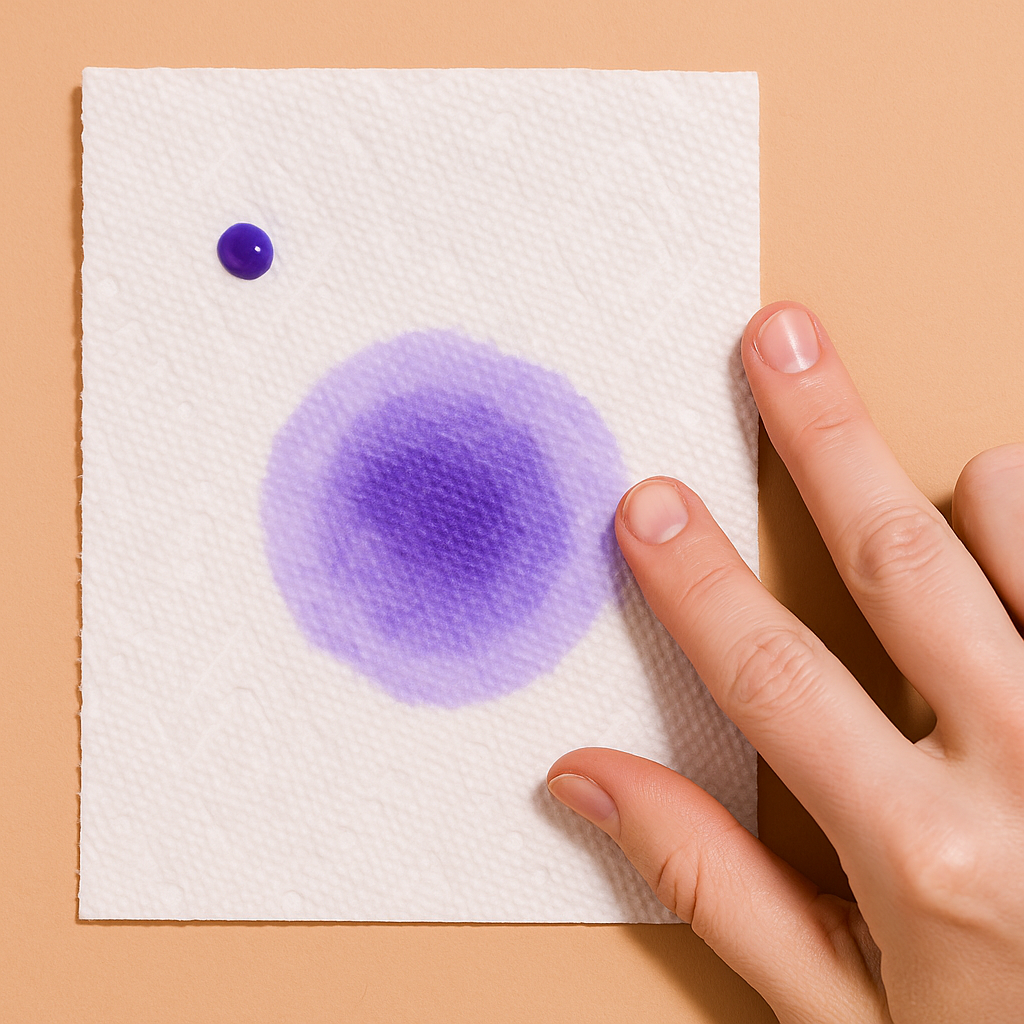
A pea-sized dot on a paper towel tells you if your purple shampoo will stain, strip, or actually cancel yellow.
The paper-towel swatch before purple shampoo hits your hair
I used to treat purple shampoo like a harmless “tone it a little” step, the way people talk about it on TikTok. Then I left a strong one on too long and spent three shampoos looking like I lost a fight with a lavender highlighter. Now I do the same quick test every time I buy a new bottle, even if it’s a blonde-safe salon brand.
Squeeze a pea-sized dot onto a plain white paper towel (or a cotton round if that’s what you’ve got). Add a few drops of water and smear it into a 2-inch circle with your finger. What you’re looking for is the undertone as it thins out: does it stay inky, blue-violet, and dense, or does it fade into a soft, grayish lavender? The inky ones (think Fanola No Yellow vibes, even if you’re using a different brand) can grab onto porous ends fast, especially if you’ve got highlights that are a little fried from heat styling. The softer, grayer ones tend to be more forgiving for frequent use, like the formulas that feel closer to Olaplex 4P or Redken Blondage in intensity.
Here’s the part I care about: if the swatch leaves a hard-edged stain on the towel that won’t rinse when you run it under the faucet, I don’t put that shampoo directly on my lengths. I’ll emulsify it in my palms first, or I’ll keep it at the roots and let the suds slide down for the last 20 to 30 seconds. If the swatch rinses clean and looks more smoky than neon, I’m comfortable doing a full, even pass through mid-lengths and ends for one to two minutes. It’s not science. It’s just a quick “is this going to behave” read before my hair becomes the test strip.
Toning timing: use your shower playlist, not the label
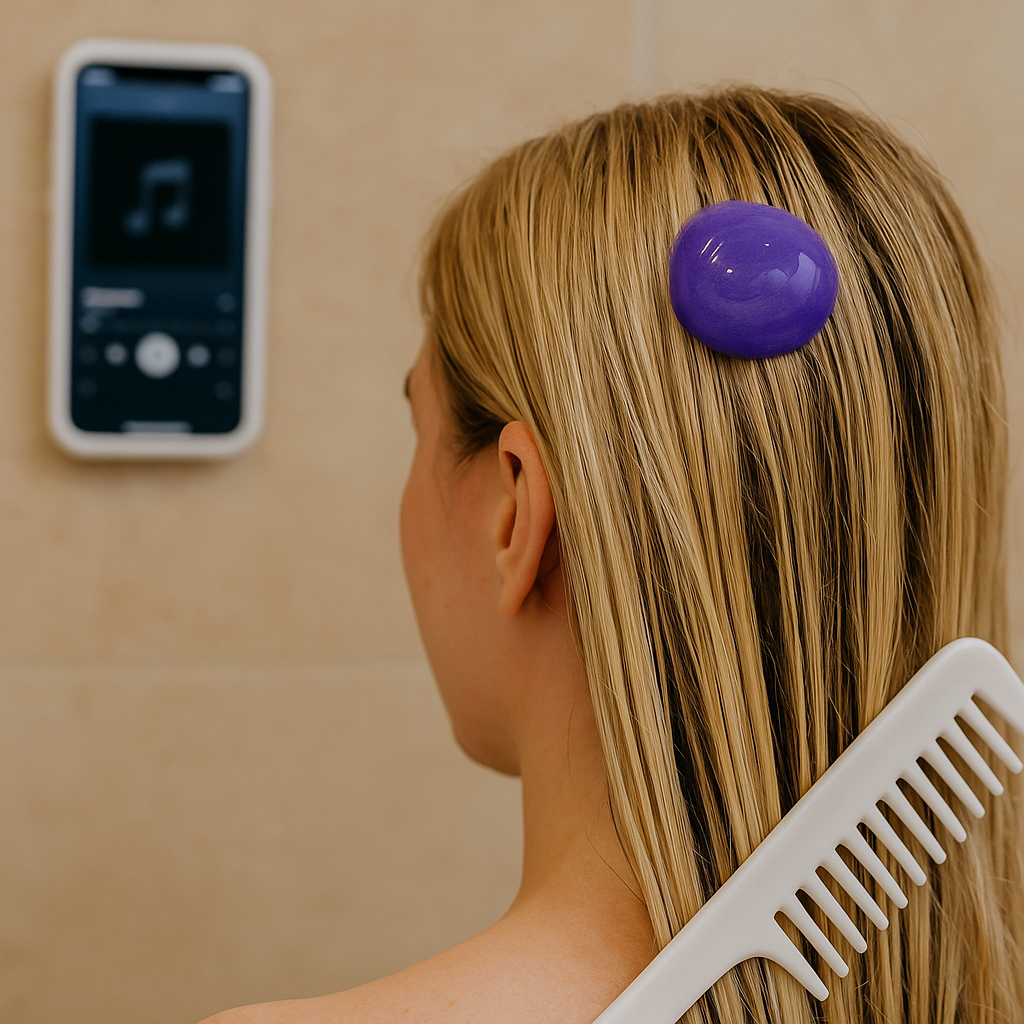
Every purple shampoo bottle is bold about leave on 3 to 5 minutes, and I’m convinced that number was written by someone with perfectly even, non-porous hair who never uses a flat iron. In my bathroom, timing is the whole difference between fresh blonde and why are my ends lilac but my crown is still warm. I stopped trusting the label and started timing it to something I can repeat without thinking.
I use one song. Not a stopwatch, not vibes. One song I know is about 3 minutes long, queued at the start of my shower playlist. If I’m doing a strong purple shampoo day, I lather, comb it through with a $4 wide-tooth comb (the kind that lives in the shower), and I start the song. When the chorus hits, I check my hair with my hands: are the ends feeling squeaky already? If yes, I rinse early. If it still feels slippery and coated, I let it ride until the song ends, then rinse immediately. No extra just a little longer. That’s how I end up with purple grabbing on the most damaged parts.
Two details that changed everything for me: first, I never apply purple shampoo to soaking-wet hair if I want it to tone evenly. I squeeze out excess water so the product doesn’t instantly dilute at the crown and stay concentrated at the ends. Second, I separate tone from clean. If my hair is oily or I’ve got dry shampoo buildup, I do a quick regular shampoo first (something gentle like a basic drugstore formula), rinse, then purple shampoo on clean-ish hair so it can deposit predictably. This is the unglamorous part nobody puts in a GRWM clip because it’s not aesthetic, but it’s how I keep my blonde from bouncing between brassy and over-toned. Your shower playlist is more consistent than your memory, and consistency is what makes toning look intentional.
When purple shampoo isn’t enough: the gloss-in-a-bottle move
If you’ve ever chased brassiness with purple shampoo and ended up with dry hair that’s still somehow warm, you’ve hit the limit of what a tinted cleanser can do. Shampoo can nudge tone, but it also has surfactants doing their stripping job. When my blonde starts looking flat and slightly yellow all over (not just at the roots), I stop escalating the purple and switch to a gloss or a toning mask. Same idea, different vehicle.
The tell is how your hair looks in indoor lighting. In daylight you might think you’re fine, then you catch yourself in a Target aisle mirror and everything reads like butter. That’s when I reach for a deposit-only product like Kristin Ess Signature Hair Gloss (the cool blonde shades) or a toning mask that’s basically conditioner with pigment. The first time I used a gloss at home I was shocked at how salon-ish it looked compared to my usual purple-shampoo roulette. It gave me shine and tone without that tight, squeaky feeling at the ends.
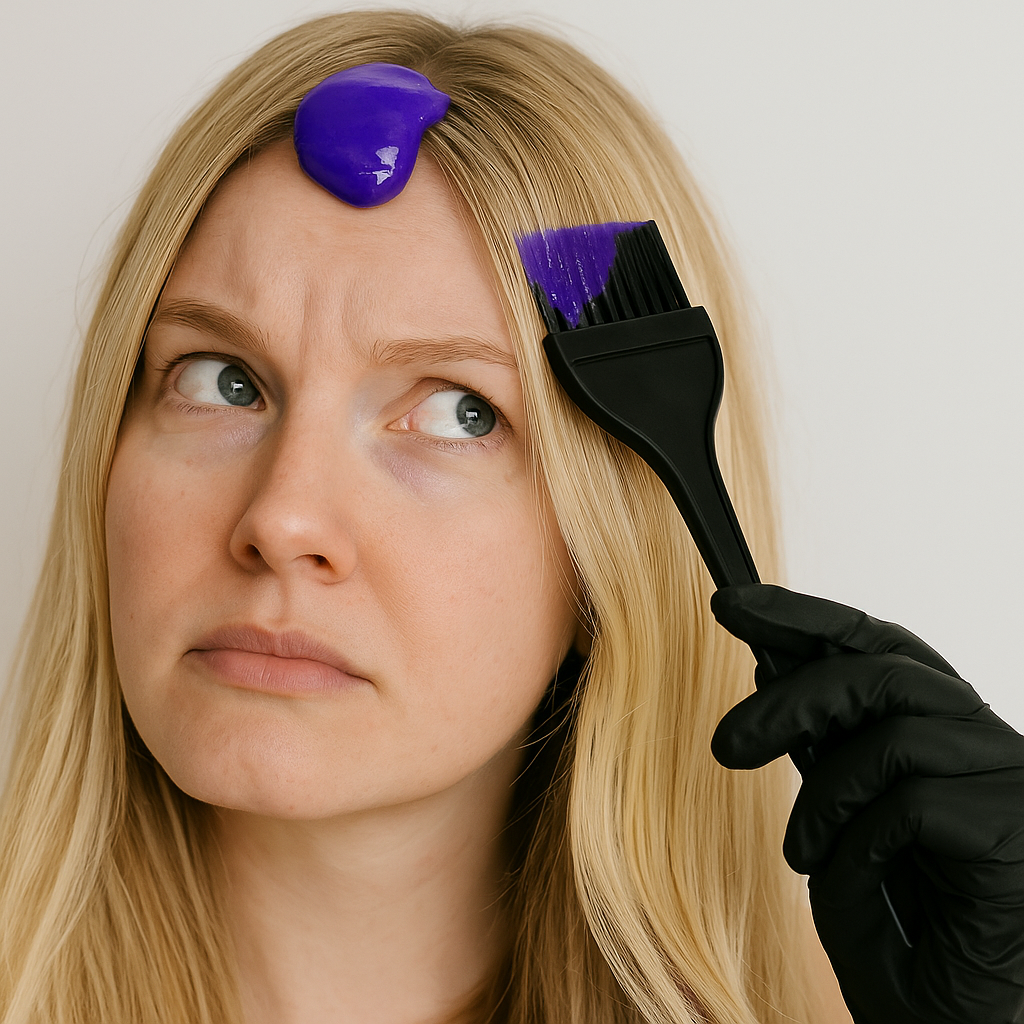
My method is boring, but it’s repeatable: towel-dry hair until it’s damp, not dripping. Section into four quick twists with claw clips. Apply the gloss or toning mask like you’re icing a cake, starting at the most yellow areas first (for me, it’s mid-lengths). Then I use a cheap dye brush to feather it through the ends so they get less product than the rest. I set a timer for 10 minutes and I don’t exceed it just because I want more. When I rinse, I finish with cool water for 15 seconds because it helps the cuticle lie flatter and the shine looks better immediately.
This is also the move when you’re trying to match a specific vibe from an inspo photo, like that clean, slightly icy expensive blonde look you see on Pinterest boards. Purple shampoo alone won’t give you that glassy finish. A gloss gets closer, and it buys you time between salon toners without turning wash day into a chemistry experiment.