
A cheap folding board, one hanger trick, and a tote-bin reset keep my capsule pieces crisp and easy to grab.
Use a folding board for the pieces you touch every day
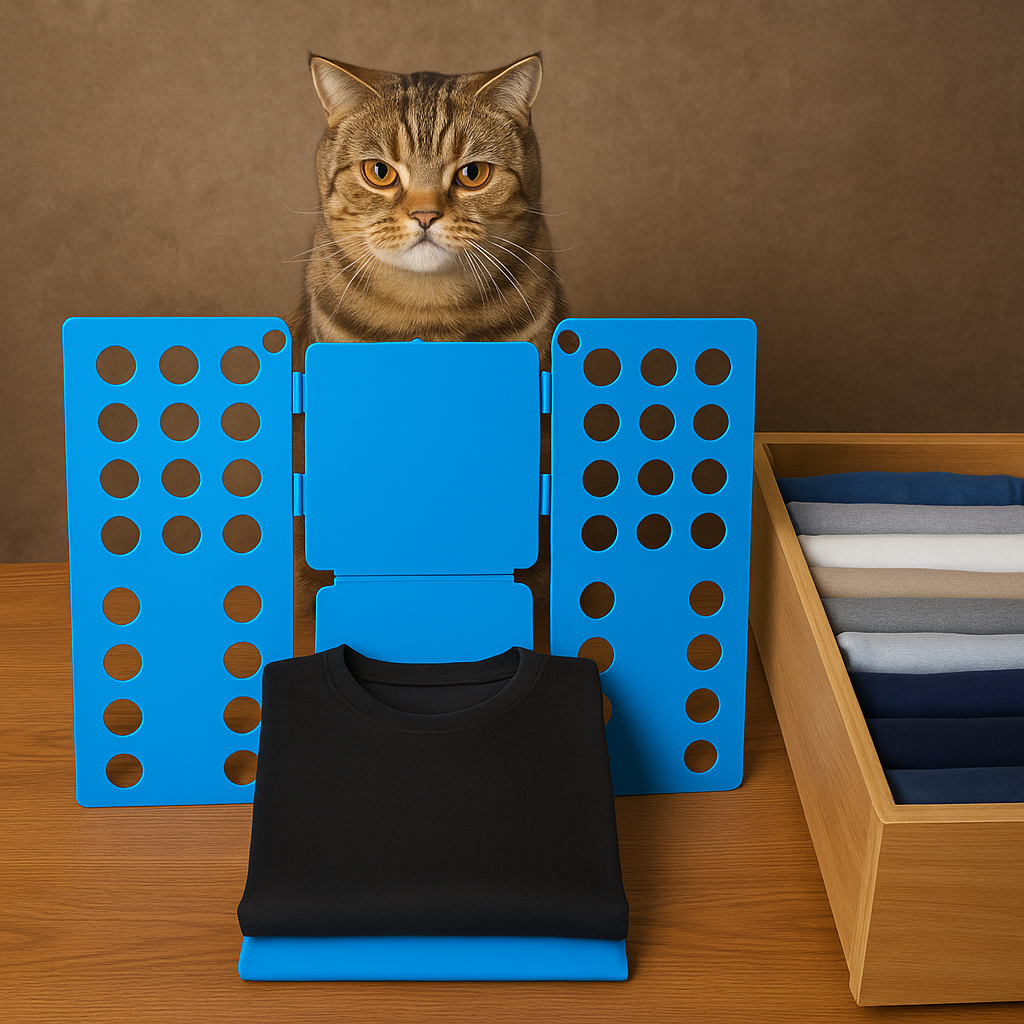
I resisted a folding board for years because it felt like a dorm-room gimmick. Then I realized most of my capsule irritation wasn’t about buying less. It was about the same five pieces getting handled, half-folded, and shoved back in a drawer until everything looked tired by Thursday. A folding board fixes the boring, daily problem: consistency. When every tee ends up the same width, you can stack them without the little side bulges that collapse the pile the second you pull one out.
Here’s how I use it so it doesn’t turn into another abandoned tool. I only fold what lives in the top two layers of my capsule rotation: tees, tanks, thin knits, and the one long-sleeve I wear under jackets. I don’t bother with jeans, sweatshirts, or anything thick. The board stays on a shelf at waist height (not buried in a drawer) because if I have to hunt for it, I won’t use it. I do a 3-minute reset when I put laundry away: fold five to eight tops, stand them on edge Marie Kondo-style, and slide them into the drawer like files. Yes, the board is the opposite of romantic. That’s why it works.
The payoff isn’t “perfect folds.” It’s that my capsule tees stop getting those random drawer wrinkles that make a simple outfit look sloppy. I also notice faster when I’m drifting outside the capsule. If there’s a mystery shirt I forgot I owned, it sticks out immediately because it doesn’t match the tidy widths. One small warning from doing this for a while: if your drawer is overpacked, the edges will curl no matter how crisp you fold. Leave a finger of space on both sides, even if it means storing one off-season piece elsewhere.
The hanger pairing that keeps outfits together without planning
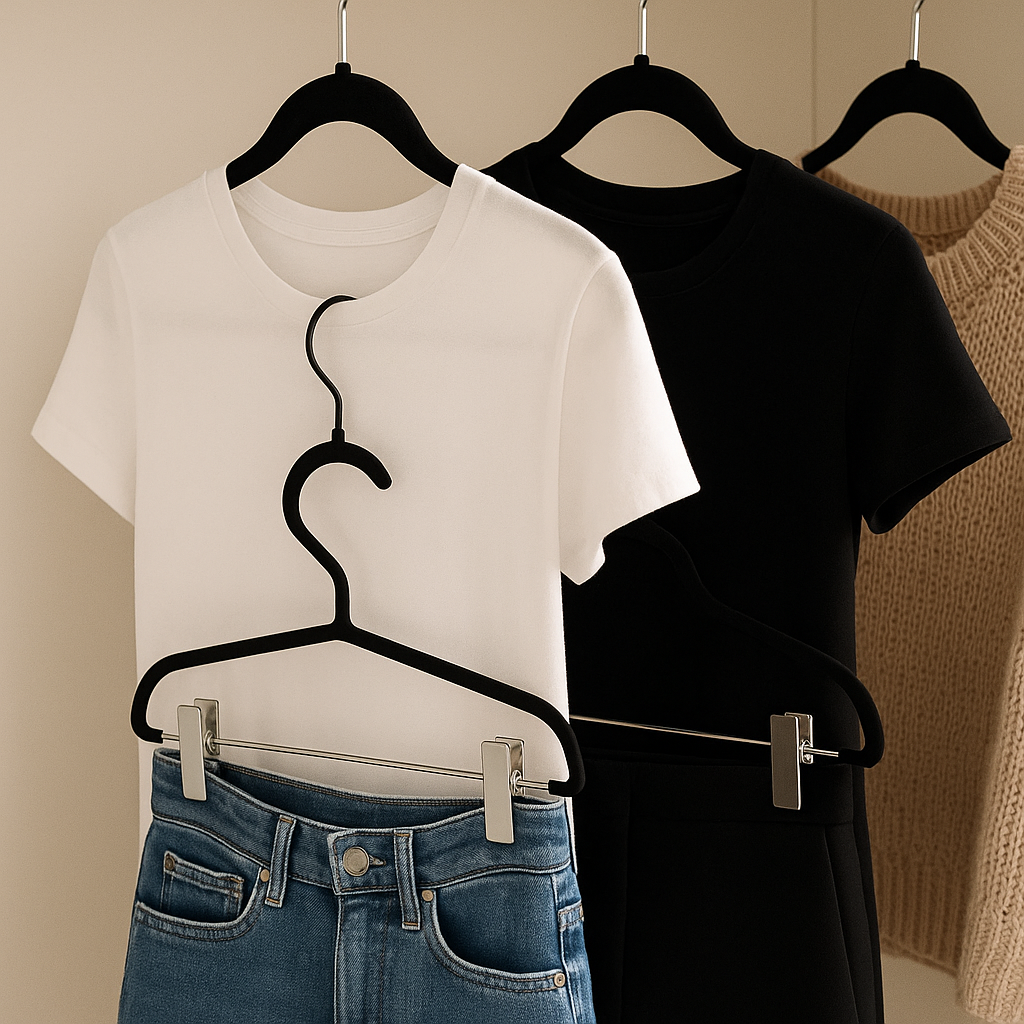
I don’t love pre-planning outfits for the week. I love the idea of it, and then Tuesday hits and the weather is weird, my shoes are still damp from a surprise drizzle, and my planne look feels like a costume. What I do like is a closet that offers gentle suggestions. The simplest way I’ve found is hanger pairing: keep the top and bottom that reliably work together physically linked, so your capsule behaves like it has training wheels without you making a spreadsheet.
This is not a complicated system. Pick three bottoms that anchor your capsule, like straight-leg jeans, black trousers, and a skirt (or joggers if that’s your life). On each bottom’s hanger, add a second hanger behind it with the matching top you reach for most: the white button-down that doesn’t gap, the black tee that sits right at your waistband, the sweater that isn’t itchy. I use slim, non-slip hangers (the MUJI ones are great, and so are the velvet Huggable Hangers) because bulky plastic hangers chew up space fast. For skirts and trousers, I like a clip hanger, and I clip the budd hanger right through the hook with a small S-hook so they move as a unit.
The hands-on detail that matters: keep the pairings boring. Don’t pick the most fu top. Pick the one you trust when you’re running late. Also, don’t pair everything. Do three or four sets max, or you end up with a closet full of conjoined twins and nothing feels flexible. I know it’s working when I can open the closet half awake and pull a linked set without thinking about color theory or proportions. And when I do want to change it up, it’s one unhook, not a full outfit rebuild.
Do a tote-bin capsule reset before you decide you need new clothes (yes, a tote)
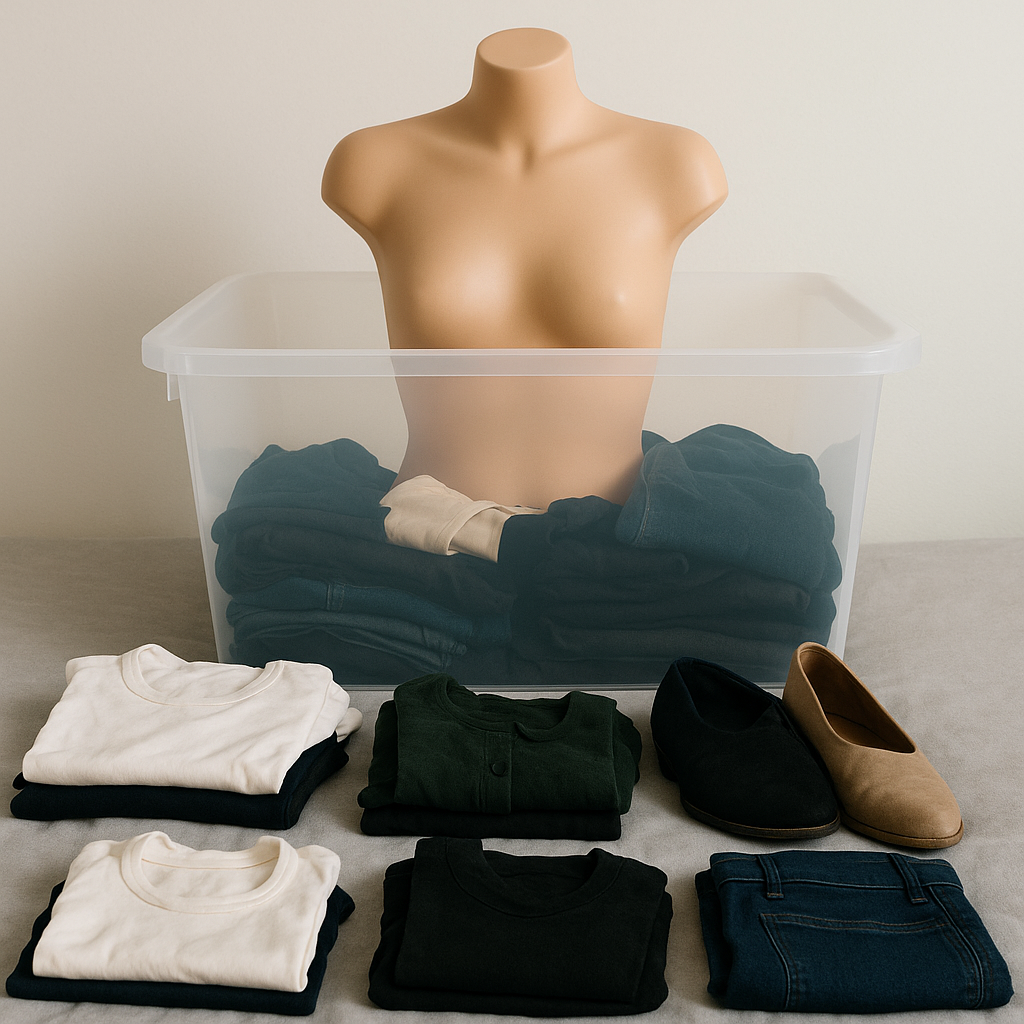
Every time I’ve impulse-added a fi piece to my capsule, it was because my closet felt chaotic, not because I genuinely lacked an item. The cure, for me, is embarrassingly physical: a tote-bin reset. I use one big IKEA SAMLA bin (any clean tote works) and a cleared bed. This takes about 25 minutes, and it has saved me from a lot of dumb purchases.
Step one is ruthless: pull every single capsule candidate into the bin. Not just the clothes you like. The ones you wear, the ones you’re annoyed by, the ones you keep meaning to try Then empty your drawer and one closet section so you have a clean place to put things back. On the bed, I make four piles that match how capsule life breaks down in the real world: base layers (tees, tanks, bodysuits), top layers (button-downs, sweaters, jackets), bottoms, and shoes. Accessories can sit off to the side, because they tend to distract me.
Now the part that feels weirdly clarifying: rebuild outfits, not categories. I pick one bottom and make two outfits from it with different tops. If I can’t do that in under a minute, the problem isn’t “I need new jeans,” it’s usually that one top layer is the wrong length, too clingy, or just fussy. I don’t take photos. I just look for friction: waistbands that roll, sleeves that ride up, fabrics that get staticky, colors that fight in daylight. Anything that creates friction goes back in the tote, not back in the closet.
When I’m done, the tote becomes a temporary benc for one week. If I don’t miss what’s in it, that’s my edit. If I do miss something, I have to name why before it earns its spot again. It’s not aesthetic. It’s practical. And it keeps the capsule tight without turning my closet into a personality test.