
Three quick checks I use before leaving: a photographed outfit grid, a travel-steamer rule, and the one scarf fold that prevents closet chaos
Build a 12-photo outfit grid before you buy anything
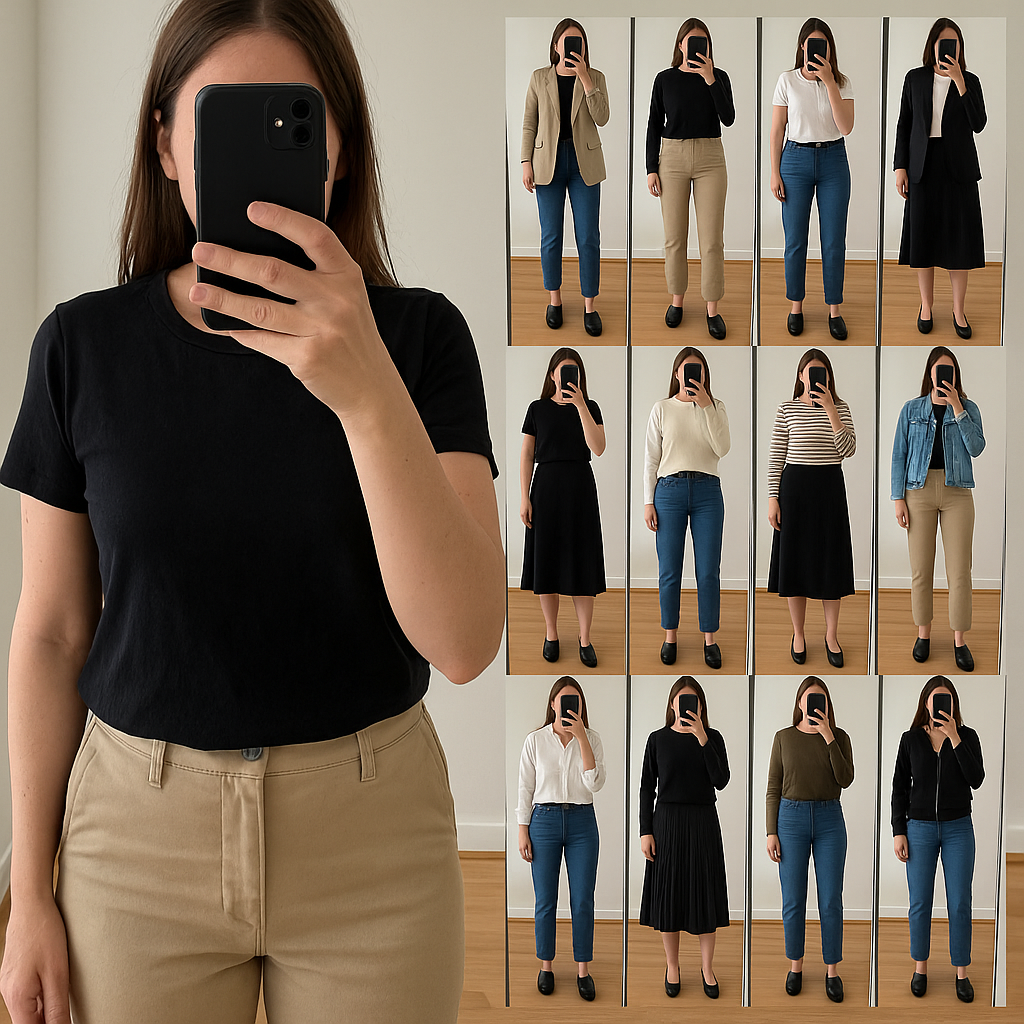
I used to kno I had a capsule because my closet looked calm: fewer hangers, matching wood ones, jeans folded the same way. Then Monday would hit and I would still do that dumb spiral where I change three times and end up in the same black tee. The fix for me wasn’t buying a bette blazer. It was proving, in photos, that my pieces could make outfits I would wear on an ordinary week.
Here is the method that finally stuck: make a 12-photo outfit grid with your phone. Not a mood board. Not Pinterest. Twelve outfits on your body, taken in the same mirror, in the same light, with the same shoes you actually walk in. Open your camera, set it to 3-second timer, and take one full-body photo per outfit. Then put all 12 into a single album and scroll. The patterns show up immediately. You’ll spot the lone orpha top that only works with one pair of pants, the skirt that forces a specific bra, and the jacket that looks amazing but hates every neckline you own.
I aim for a mix that matches real life: a work-ish outfit, a grocery run outfit, a dinner outfit, a “I might see someone I know” outfit. If you can’t get to 12 without repeating the exact same formula, that’s not a failure. That’s your shopping list, and it’s usually boring. Most of the time I need a second bottom in the same silhouette (straight jean or tailored trouser), or a third layer that isn’t a hoodie. After you have the grid, set a rule: you only add a new piece if it makes at least three new photos possible. It sounds strict until you realize how many cut items can’t even audition.
The travel-steamer rule: if it wrinkles in the bag, it leaves the capsule
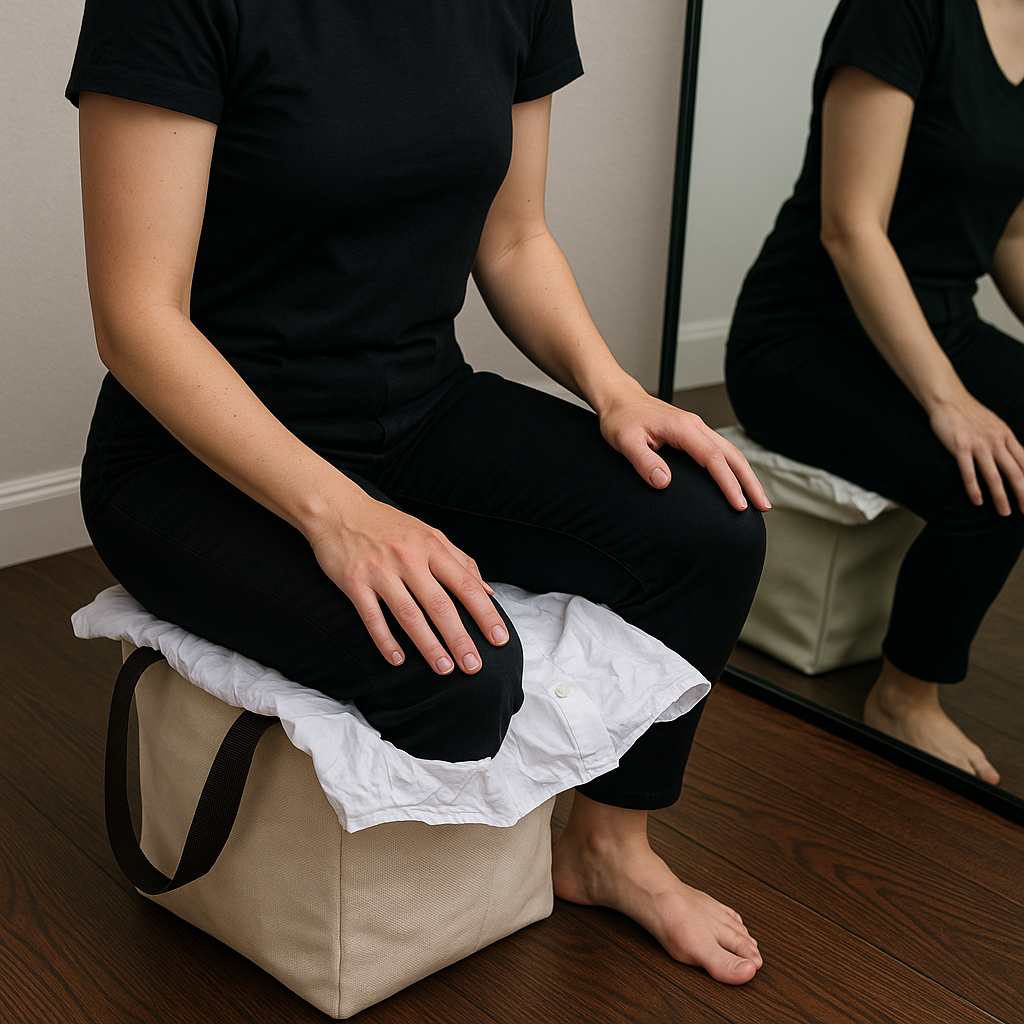
I learned this the hard way on a Tuesday I wasn’t even traveling. I stuffed a nic shirt into a tote, changed in a parking-lot bathroom before a thing I forgot about, and walked in looking like I’d slept in it. After that, I started treating my everyday capsule like a carry-on capsule. If a fabric can’t handle being folded, worn, and re-folded, it doesn’t get to be a core piece for me, no matter how good it looks on a hanger.
My test is simple and kind of mean: fold the item, sit on it for 10 minutes, then put it on without steaming. Literally. I fold the shirt or pants into a medium tote (the bag I use for errands), then I go make coffee and answer two emails. If, when I put it on, I immediately think, “I need the iron,” it’s out. Not forever, but out of the capsule rotation where it will sabotage mornings.
This is where capsule wardrobe advice gets too abstract, so here’s what has passed for me: ponte pants, merino tees, a good poplin that has a little structure, and most knits. What fails: anything with fussy viscose that creases in sharp lines, linen that looks charmingly rumpled only if you live in a catalog, and those crisp button-downs that require a perfect press to look intentional. If you love them, keep them. Just don’t pretend they’re your everyday backbone unless you enjoy starting your day by hauling out a board and filling a steamer.
If you want a practical middle ground, add one forgivin third layer that does the polishing work even when the base is simple: a knit blazer, a denim jacket that fits your shoulders, or a cardigan with a clean edge (not the floppy one that slides off your bag). I keep a mini steamer (mine is a Conair) for special occasions, but the rule stands: if the outfit needs the steamer to look like itself, it’s not an everyday capsule outfit. It’s an event outfit.
The scarf fold that keeps outerwear from taking over your chair
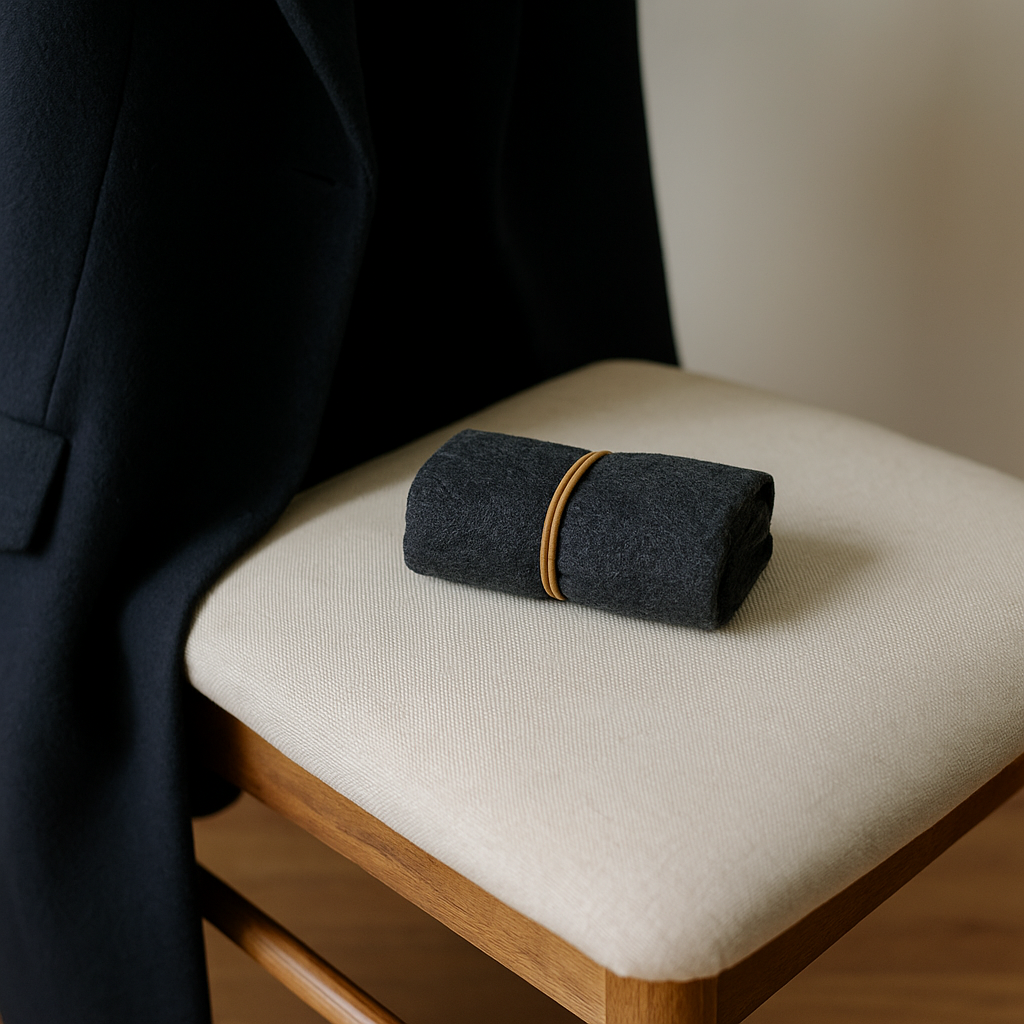
Scarves are a capsule wardrobe trap because they feel like a harmless way to add variety, and then suddenly you own eight, none of them live anywhere, and two are permanently draped over a chair like tired ghosts. I still love a scarf, especially when I’m keeping the clothing part of my capsule tight, but I only keep them if they behave like gear: easy to grab, easy to stow, and useful across more than one coat.
The trick that keeps mine from becoming clutter is a fold I stole from packing cubes. Lay the scarf flat, fold it lengthwise into thirds so it’s a long band, then fold it into a tight rectangle about the size of a paperback. Now take a simple hair elastic (the thick, no-metal kind), wrap it around the rectangle twice, and you have a compact little bric that stacks in a drawer. When you pull it out, it unfurls without looking like it was crammed in a pocket. That matters, because the whole point of using an accessory in a capsule is to look pulled together with minimal effort, not to add a new chore.
Here is how I decide if a scarf earns its spot: it has to work with at least two outerwear pieces and at least three tops in my outfit grid. I also pay attention to the annoying stuff you only learn by wearing one all day. Does it shed on a black coat? Does it itch at the collarbone after an hour? Does it slide off when you bend over to tie your shoes? If it’s fussy, it becomes a prett scarf that never gets used, which is just closet decor in denial.
I keep one wool or wool-blend in a neutral (mine is a charcoal Everlane one), and one lighter scarf that can live in a bag for over-air-conditioned places. The rest is on probation. If you do this fold and still can’t close the drawer, that’s your answer. Your capsule doesn’t need more personality. It needs fewer loose ends.